FAQ LIST – Common Questions Around Designing & Developing Board Games

Questions around designing & developing board games…

From developing board games to helping clients assemble prototypes and mock-ups, the game-making journey can be a minefield of rewarding highs and crushing lows! Although this FAQ list cannot answer for all who work in board game development, I will try to answer what I can from my own perspective.

This FAQ list of common board game questions focuses on some of the most frequent questions I am asked by clients, both old and new.

For those who don’t have time to scroll through the entire list of common questions about designing & developing board games, here is a table to help you find your own questions.

Designing & Developing Board Games - Title Question


Common Questions Around Designing & Developing Board Games | Most Common

You may also find some of these supporting links to other blog posts very helpful.

If you want to read from top to bottom, here are some of the most common questions around designing & developing board games. Or if you prefer, we can always arrange a paid discussion and 1-to-1 to discuss further your game-making journey.


Divider

Is developing a board game expensive?

Developing a board game can be very expensive! In terms of how a board game is objectively approached, the components within the game, manufacturing, development time, and creative journey – all play a part in the costs. And so much more!

Creating a board game can be a costly endeavour for hobbyists and businesses…

There is no beating around the bush; making a game can be very costly for a variety of reasons. Using my experiences in designing and developing board games, for the sake of the client, I try to be budget-aware. In addition to being budget-aware, I also consider approaches in which a client can save money.

Is developing a board game expensive? It can be.

Why are board games SO expensive to make?

Board game development costs can vary significantly depending on the scope of the project, and ‘how’ the project is approached!

A simple card game will cost far less than a fully illustrated, component-heavy tabletop game. Early planning and clear direction can help manage costs effectively, but this is not guaranteed.

Board game design and development involve multiple stages and professional skills to bring the vision to life. Here is a simple breakdown of some of these skills :-

  • Concept creation.
  • Gameplay mechanics.
  • Artwork.
  • Prototyping.
  • Playtesting.

Developing a board game can be incredibly expensive. More so if 3D components and plastic manufacturing are involved in the process.

How can I help with your board game?

I offer support across the full board game design process. From early ideas to finished prototypes.

This includes game mechanics, visual development, prototyping, and preparing files for print.

The cliché – the USP!

I feel mine resides both in commercial experience and creative passion, and a no-nonsense approach in striving to make something good! I take great joy in seeing a client’s board game idea come to life! If a client has that long-time board game itch… let me know if I can scratch it!

Designing & Developing Board Games


How much do I charge to design a game ( board game prototype )?

I typically work on a day rate for board game design and development services.

This allows flexibility so clients can scale up or down depending on budget and project needs. Clients can also end or cancel a project whenever they want to, as long as my time is compensated.

Budgets are treated as rolling contracts in which the client or I can leave at any time – no obligations.

To highlight, my involvement in making a game is a service, not a product. When hired to help develop a game, I am selling my time and navigating the creative journey with the client. It is a process shared with a mutual goal. You are buying my time, creativity, and skills

How much do I charge to design a game?

By the day, no obligation, no soul-selling contracts. You can go when you’ve had enough, as can I! These projects can be costly to design and develop. Anything from around £800 – £20k. It all depends on what is to be done.

Do I work hourly?

No. Day rates allow for more productive progress, especially with the complexities of board game design and development. My minimum time – factoring in paperwork, 2 days for a small project.

DO I take on small projects?

I tend to prioritise larger board game development projects, but I’m open to smaller ideas depending on scope and budget!

If the concept is strong and clearly defined, and tickles my creative fancy! A project is always worth discussing!

Small project doesn’t always mean small fees, by the way!


*I do not work for free, but I can offer a free 10-minute discovery call – no obligation, no fuss, no expectations. Depending on where you are based!

Can I help create gameplay rules and mechanics?

Yes, I can help with creating game mechanics for your board game.

I can help develop, refine, and balance gameplay in an attempt to make your board game as engaging and functional as possible – but remember, this is all subjective based on opnion!

Although I can help make the gameplay rules and mechanics, the client must take responsibility for their product – as I won’t own the IP! The IP will be clients! All yours!

Tip – a client can only know if they are happy with they play their own game!

Will I sign an NDA?

Yes. Protecting your board game concept and intellectual property is important, and I’m happy to sign an NDA before starting work, but it depends on the NDA’s clauses.

I can create an NDA on a client’s behalf if they prefer.


To what extent can I help you design and develop a board game?

I can assist in a variety of stages in board game development. From initial concept and prototyping, through to polished mock-ups and print-ready board game files. I can help clients take an idea from scratch to something they can see and hold.

Here is such an example.

Designing & Developing Board Games example drawing

And almost by magic, a final prototype and mass production model.

London Pub Crawl - mad dawg games - Designing & Developing Board Games

I can also work on single components in specific phases of a board game project.

  • Idea generation.
  • Proof of concept.
  • Developing gameplay.
  • Content.
  • World-building.
  • Visual/graphic design.
  • Art Direction.
  • Illustration.
  • Playtesting.
  • Sourcing playtesters / working with playtesters!
  • Liaison with prototype manufacturers and printers

Do I work with individuals?

Yes, I work with individuals as well as businesses! Size is not an issue. However, it’s important to understand that developing a board game professionally can require a meaningful investment.

I work with hobbyists and passion projects also, but again – these projects can be expensive!


Are there games or projects I tend to avoid?

Any which causes me a loss of sleep and income!

I avoid projects involving copyright infringement, (overly) offensive content, or legally risky ideas. Originality and professionalism are essential in tabletop game design.

In terms of comedy, I am open to working with funny projects! But this can be a tightrope today! I have to assess a game brief on a case-by-case basis!

Do I do graphic design?

I do, and have! Graphic design for board games is, and was, a core part of my professional background. This includes layout, typography, integrating artwork into a cohesive visual system, and building a theme for a board game!

Here is one case study – Designing a retail game.

Or you may be interested in these services here.

Need a hand with your board game design project?
Can I illustrate and create game artwork?

Yes, depending on the style and requirements. I can produce board game illustrations and artwork, or advise when it’s better to bring in a specialist illustrator when a client is looking for a certain style.

It should be noted that I have a certain style and way of drawing – keep this in mind if you would like me to illustrate parts of your game! More on this at the bottom of this post!

Here are a couple of examples.
Stylus - Designing & Developing Board Games
Types of digital illustration


Can I come up with a concept when developing a board game?


Yes, I can come up with a concept for a board game. But note – coming up with a concept is not easy! I can help turn early ideas into structured board game concepts, ready for development and prototyping.

Are there conversations before a project?

Yes, there are plenty! It is part of my board game-making process. Initial conversations fall under board game consultation services.

These sessions help define direction, scope, and next steps before committing to full development. I can run dedicated 1-to-1 video consultations or a free, quick discovery call on the phone. No obligation, no pressure!

Where am I based?

Ampthill, UK. With the occasional meetings in and around London. Most board game design work is handled remotely, making it easy to collaborate regardless of location.

Furthest distance to date for a project – Australia!

If a client prefers, I can meet anywhere within a commutable train distance as long as my time and travel are compensated. I am less than 50 minutes by train from King’s Cross in London, and I am very familiar with parts of London also – from Wimbledon to King’s Cross to the Southbank area.

I am also, occasionally, able to drive to a location in Bedfordshire as long as petrol and time are compensated.

Do you work collaboratively with clients? ( HYBRID )

It depends on what ‘collaborative’ translates to in real terms.

Collaborative or hybrid working is common in board game development. Teams collaborate in generating ideas, writing, designing, developing, and many other aspects of the game. I avoid reworking design files that have been set up improperly, AI images for print, low-res imagery, or files that are just not suitable. In certain instances, it is necessary to rework files from scratch. I also avoid collaborative work that damages or interferes with my working process. Most people wouldn’t pick up a plumber’s wrench or blow torch and start working the pipes! They’d let the plumber do their job, and I’d expect the same.

Although if a client wishes to write copy, share complete images, inspiration, ideas, discuss, brainstorm, offer opinions, share past projects, hopes and dreams – these are all very welcome. Dividing tasks is efficient.

I have also supplied and passed over project files and design files so that other developers and editors can change or tweak work according to their needs. This would need further discussion, however!


Can I step in partway through a project?

Sometimes, but I’m selective! I avoid projects that are a mess. I have to assess on a case-by-case basis as to whether I can help.

Projects that have structure and clarity are far easier work compared to ones that need to be reworked from the ground up.

I can work ‘in part’ or in certain ‘phases’ of a board game project. From creative design, to ideation to helping to develop a game system. And of course, helping with graphic design and artwork on your board game.


Can I promise that my game will make millions in money?

Erm… no.

Paraphrased – I am rarely asked this question in seriousness – until recently…

No, I cannot guarantee your game will make millions. I don’t proclaim or pretend that using my creative services will guarantee a return or boost in your fortunes. Sorry, wish I could say otherwise!

As is my understanding, board games’ financial success comes from a variety of contributing factors and angles. Many of which are outside of the control of a designer or an individual alone.

Hiring me will not guarantee your millions. But I can guarantee that I will try to help
create a design that meets a client’s wants and expectations, with the added extra of sharing my experiences and knowledge.

Game ‘success’ is well outside my remit, and potentially the clients’. However, I am happy to share a success story from my time at a former company, working as part of a team.

How can I stop people from stealing my board game idea?

There’s no single solution. NDAs can help, but for proper intellectual property protection, you should speak with a legal professional. You cannot copyright ‘game mechanics’ as far as I am aware.

Am I a copywriter?

Not professionally.

I can help structure and draft early rules and content, but I would highly recommend using a professional copywriter for final board game rulebook writing. I can only help with the very early draft if I have been commissioned to help with developing game mechanics.

**This text should not be used for the final draft. More on this in another conversation.

Can I proofread text?

No, I cannot proofread copy or text. This is outside of my remit, sorry. If you want to edit your own text in InDesign, you may find these 2 articles interesting.

*Text disclaimer: All final print-ready text is the responsibility of the client. I cannot edit or proofread text. I can, however, help with early placeholder text, but a professional proofreader and editor should be employed to help with your project. I cannot take responsibility for typos, grammar mistakes, inaccuracies, spelling mistakes, or other text-based errors. Please proofread all final text and artwork.

In short, I cannot spell for toffee!

Do I offer legal advice?

No. Always consult a qualified legal expert for contracts, copyright, and IP protection.

Is there paperwork involved?

Yes! There is often a fair amount at the start of a board game project. Contracts, briefs, revisions, and production specs are all part of a typical board game development process. Perfect planning helps in establishing core goals and potentially saves money.

Will I work with difficult clients?

I aim to keep projects positive and productive. I won’t work with clients who are aggressive, disengaged, or consistently difficult to collaborate with. I am friendly and professional, but my tolerance has limits – time is also precious.

I also have to make intelligent and progressive decisions with whom and where I work.

Have I developed other board games in the past?

I have developed, helped and co-developed board games in the past. I have worked with charities, start-ups, councils, businesses, and individuals both in the private and public sectors.

To list a few.

My initial experience came from working at a gifting company where I learned the ropes of developing party games and game-like products. Under the banner of this company, I had the honour of seeing products I was involved with creating grace the shelves of international retailers. Some of which were undertaken by Hasbro and Asmodee.

What types and genres of games have I worked on?

I have worked across a wide range of genres with a variety of clients. I have worked on party games, education games, dice games, fun card games, fiction, fantasy, sci-fi, racing, music – in a range of styles and themes.

My role in these projects has varied from anything as grass roots board game developer to a graphic designer, to a play tester and test organiser. I can also illustrate characters and help a client to world-build.

Can I work on only part of a board game project?

Yes! I can contribute to specific areas such as game mechanics, artwork, or prototyping. It depends on what a client wants or needs. Budget is also a contributing factor.

Do I work with AI artwork for commercial projects? ( In final product )

I avoid AI imagery for commercial board game artwork.

Copyright and ownership concerns make it risky for print-ready projects. As can formatting AI-generated imagery for print.

I am biased, but I try to encourage clients away from AI visuals. Whether this be a prototype or commercial box art. AI never seems to generally win the hearts of the general public!

Can I work with stock graphics when creating a new project

Yes, I can! When used correctly, stock graphics can be a useful and cost-effective part of development.

However, although stock graphics can be a great time-saving measure, stock imagery is not always the best solution for a variety of reasons. There is a time and place for stock graphics and stock textures, but as a designer and developer, I try to encourage design appeal and originality with my clients.

Can I work as part of a team on a board game project?

Yes, I can work with big or small teams. I can work with individuals.

Will I ‘fix’ or prepare client-made artwork for print?

No. Preparing print-ready board game files requires a correct setup from the start, and fixing unsuitable files is rarely efficient.

I can, in certain circumstances, redraw or recreate files from scratch.

I can also digitise a client’s artwork if it has been created in traditional mediums. But, I personally avoid clients’ print-ready files.

However, I am happy in certain circumstances to create design files that a client may be able to edit or hire a designer to edit in the future.

For the budding DIY graphic designer client out there, you may find some of these posts interesting:

Press the image to read more on your text editing woes if you are editing your own files!

Projects I avoid

I avoid legally questionable, unoriginal, or harmful projects. Clear direction and commitment are also important when taking on new work.

What I can’t do in board game development

I can’t guarantee success or provide legal protection. Some aspects of publishing and commercial success sit outside of design and development.

Neither can I operate at the same capacity or capability as a larger development studio. I do have skills and experience, but I am not an ‘everything’ professional in terms of creating board games, unfortunately!

What I am not!

I am not a publisher, legal advisor, manufacturer or marketing agency.

I specialise in board game design, development, and prototyping—helping bring ideas to life properly.

How to make a retail-ready card game – Other helpful links

In addition to these links, I also have some links to 3rd part websites. Please take a look.

Other websites you may find interesting for making games

Okay, you got me. I am the owner of Dragon Bone Games.co.uk. A website all about making games, a niche gaming that you may find interesting to know a bit more about. Here are some links.

*All links lead to the 3rd party website.

My Board Game Prototype Process | Explained in 7 Key Stages

Developing a board game prototype process…

One of the most frequent questions I am asked is: ‘What is the process of making a board game prototype?’ Or ‘How do I develop a working board prototype?’ Or questions to that affect. And it is a fair question about something that can be as complicated and nuanced as making a working prototype of a game!

For those who are curious, I have tried to illustrate a ‘typical’ process of how I will design, develop, and send a prototype to print for a client.

Board Game Prototype Process Title Header Graphic Drawing


Not every project is identical, but there are some common themes and patterns to developing a board game prototype. Whether it is a low-fidelity ‘grey-box’ mock-up, or a fully rendered test print for testing and playing.

My board game prototype process, at least the design! Is not dissimilar to how my graphic design process works in many respects. Although there are some significant differences when developing what is, in essence, a full product! Graphic design is but one aspect! A stage within the whole process of making a board game prototype.

Before I divulge my process and workflow for developing a board game prototype, let’s start with the basics first.

This step may need to be repeated multiple times, depending on what is required of the prototype and client budgets!

Divider graphic

What is the process of making a board game prototype?

A prototype is an early, preliminary version of a product, item, system, or concept, or in this case, a board game. It is a pre-production model – an iteration of a product. Developers and designers can create more than one version or prototype – sometimes going through multiple versions of the same concept before arriving at the final design.

I have helped design and develop board game products, STEM products, low-cost items, and products for the gifting market.

Processes can vary from person to person and from company to company, but this is how I roll!

Developing a board game prototype may consist of :

  • Establishing the purpose and requirements of the game.
  • Creating balanced gameplay and rules.
  • Conducting initial tests with play testers.
  • Factoring components.
  • The visuals and the theme.
  • Adding the final touches to the game prototype before getting it ready to print.

That is a general overview of developing a board game prototype, omitting the nitty-gritty details! Each project is unique and can come with its own trials and challenges. Each unique project can come with creative exploration, too!

Divider

Process Overview | Developing a Board Game Prototype Process

From early ideas to a polished, playable prototype, it always includes a workflow and process. This post is a journey and overview of how to take a game from concept to something you can see, test, and refine.

  • Discussion.
  • Research and inspiration.
  • Early ideas and rough concepts.
  • Developing the core gameplay.
  • Refining and balancing the game.
  • Playtesting and final adjustments.
  • Prototype completion and handover.
Board game prototype process flow diagram and illustration


Shorthand Answer | Designing & Developing A Board Game Prototype – Example

It is sometimes easier to show rather than to tell.

For the reader’s sake, I have tried to make this post as digestible as possible – but it still only touches the surface of what is involved! This is an example of my process for developing a board game prototype in action.

1 ) Talk | Brief – Plan


A client reaches out, provides a brief, shares details about the project and themselves, and I determine whether I can help. It is in this stage that I try to understand both the client and the project.

2 ) Finalising Paperwork | Research, Materials

Paperwork, information, and materials are supplied by both parties.

Paperwork will consist of various pieces of information. Documentation may list work to be carried out, what is to be made, and source materials and relevant information from both parties. Copyright releases, payment terms are outlined, and parties involved are written in. In short, this is all pre-making and paperwork for the project.

3 ) Developing the Core Game

From rules and mechanics to world-building! This is a core stage of establishing the game and what the game wants to be.

Depending on how a brief is presented, it is possible that a client will have established the initial game concept in principle. I can, however, either help a client further by building upon their idea or help them from scratch! It should be noted, though, that one is more expensive than the other.

In this step, it can manifest in the form of some of the following :

4 ) Board Game Aesthetics

The look, the vibe, and the general appearance of the prototype. I can, and do, help clients with developing the appearance and visual narrative around a game. This is how I started the career path.

Game mock up - London Pub Crawl

5 ) Refine, Polish

Without screaming the importance of playtesting board game prototypes as an important part of the development process ( hint – it is ). It is after playtests that you will polish, tweak, and amend the game prototype. This can also apply to the visuals.

Playtest… Playtest.

6 ) Developing the Prototype ( getting it printed )

Either the client can send the project to print, or I can handle it for them. I can act as a middleman. A middleman with experience in developing products. Sending files to print in the Far East, the UK, and Europe.

7 ) Sign Off – The End… For Now

As a final phase of developing a board game prototype process, this is when the client and I will sign off on the project and part ways! All the best with the journey, see you on the next venture.

Divider

Short Summary | What is the Process of Making a Board Game Prototype?

From helping the client to write a brief, offering consultation, and designing a game ( which is important ), to helping a client to build a prototype and establishing the core look of a game! I try to act as a sherpa in the client’s journey to developing a board game – whether it be their first or last!

Below is more information on my process and the ins and outs of developing a board game prototype process.

What is the process of making a board game prototype
Divider

1) The Brief | Setup, Planning, Defining the Goals

This is the foundation of an entire project! A crucial step in mutual understanding is outlining what needs to be developed for your board game.

I cannot, and don’t, take projects without a written brief and goal to adhere to. Whether these goals are more open or closed is another matter, but regardless, an endpoint is a must.

Money, timeline, and estimate – with the outline of a project established and a list of either rough or polished notes, I will give the client an ‘estimate’. Please take note of the word ‘estimate’. An estimate can cover anything and all, from guessing time-frames to the scope of work to budgets. But it is a complete guess. As each project is bespoke.

When embarking on a new project, I like to try to get to know and learn about the person behind the client! Their goals, the reason for the project, what they like, and what they are like.

In short, I like to learn whether the prototype is part of a bigger goal or part of a passion project, which ties into how I see and approach the project.

I have previously written a post on how to guide a client in writing a Graphic Design brief, which shares some similar attributes to developing a board game prototype and its processes.

Brief First Phase: Defining What is What for the Game Prototype

At this stage, we’ll define:

  • The core idea or theme.
  • Target audience (casual, family, strategy players, etc).
  • Game goals and player experience.
  • Constraints (time, materials, complexity).
  • Client expectations.


When writing a board game brief and as part of the board game development process, the more planning and ground rules established at the start of the project, the better. This phase may also include:

  • Helping to write a basic game concept ( * Co-writing, I am not a proofreader, by trade, and can’t offer copywriting as a service/ Especially in its final form! That’s for the writers! ).
  • Outlining rules.
  • Deciding on components (cards, board, dice, etc).

*Tip | If you are sending a brief or a project, try to include as much information as possible. Components, aim, type of game, etc. Also, any preliminary research for your project will be a great benefit also.

2 ) Paperwork, Gathering Information, and Consolidation

Not all the core stages of developing a board game prototype are purely about the ‘design and making‘. The paperwork, the research, and the information gathering are as important as action!

Perfect planning and all that.

In this stage, I will review a specification – often written by me- and establish the work to be undertaken. This is part and parcel of planning.

It is in this pre-step that I will formulate a written agreement and gather any initial research for the project. It is also here where I will discuss formalising the project, from the outline of work to be undertaken to the payment terms. I can, and have written and signed any copyright releases, NDA’s, or waivers – depending on the mutual terms.

Research – Example Developing a Board Prototype

With the foundations of the project and the paperwork in place, I will carry out any additional research where required.

This includes, but is not limited to :

  • Looking at similar board games.
  • Studying mechanics (deck-building, core aims and goals, is it fun! etc).
  • Gathering visual and thematic inspiration.
  • Identifying what works — and what doesn’t.
  • Analyse competitors.
  • Note gaps or opportunities for innovation.

Research can be the food and fuel for imagination when it comes to developing a board game prototype. It is all part and parcel to the process!

3) Early Ideas & Rough Prototypes ( Design & Gameplay )

This stage can vary from project to project, especially since each prototype is typically bespoke!

However, I do have a common development process for a full prototype. If I have been commissioned to develop a board game prototype in full, my approach is collaborative, explorative and experimental. From creating a ‘greybox’ mock-up to helping a client develop gameplay, this phase can be quite exciting and open to possibilities.

I can also help with world-building and creativity. From the visual theme for the game to developing artwork and spot pieces. Whether this is for a party-type game or something with a broader theme and setting. I love storytelling, both visual and written.

Developing rules, very rough mock-ups, or some or all of the aforementioned, depending on the depth of my involvement.

This phase of the process will resemble the following:-

  • Sketching mechanics and systems.
  • Creating rough rule ideas.
  • Building very basic prototypes (paper, pen, placeholders), this is also called “greyboxing”.
  • A roughing of the theme and concept drawings.

Nothing is final here and exists to explore and experiment with the game – if any artwork is created, if at all – it is generally very rough and will tie in with the core components.
If I am creating a game, the grey boxing stage. Examples include:

  • Handwritten cards.
  • Simple boards.
  • Quick mock-ups of gameplay and components.

Below is a real-life low-fidelity mock-up!

Low fidelity mock up of game

OR…

Low fidlety grey box example of game

This is about thinking fast and putting this down on the table. Nothing is sacred in this early phase of developing a board game prototype process. Artwork, if any, will be ‘stick people’ at best.

the board game developer needs to make sure they have a working game!

4) Developing the Core Game

From the early ideas to visualisation, the client and I will select the strongest concept and components and develop these further.

This stage can manifest in many ways, from helping to arrange play tests to building upon the rules. Sometimes it is necessary to go back and forth between stages as per player feedback and experimentation.

Be it through taking a more introspective view of gameplay, or running playtests, here is an itemised view of developing the core game :

  • Help in expanding rules.
  • Clarifying player actions.
  • Structuring turns and gameplay flow.
  • Defining win conditions.

This is assuming I have been commissioned to help design a game prototype from scratch or from a primitive stage in the game developer’s journey.

Assuming I have been commissioned to work on ‘the full monty!’ this may also be required:

  • Reviewing core game components.
  • How can these be designed and made.
  • Visual theme and aesthetics.

At this point in the journey, it is no longer about generating ideas – it’s about improving one! This phase of the journey must also adhere to the mantra that ‘nothing is sacred’ as well. Being rigid, rather than flexible, in the phase can do more harm than good to the final product.

Developing a Board Game Prototype Process: How I try to do the heavy lifting

My role in helping clients to design and develop a game prototype can be complex, although I try my utmost to absorb the burden where I can.

Creating a board game can straddle a couple of creative professions, from publishing to product design. Within the process of making a prototype or developing a board game is a complex variety of skills! Many of these skills are professions in their own right. My main skills lie in the creative and technical aspects of making a prototype.

I’m not a copywriter, proofreader, editor, legal expert, manufacturer, warehouse owner or logistics person!

Past and present, I have helped clients to design a prototype from scratch to a hardcopy object they can hold. My very first experience comes from working at a ‘gifting company’ where I was involved in creating party games towards the latter end of my tenure.

Graphic Design – Visual Storytelling

There is such a thing as the cart before the horse, and this is especially true with graphic design and artwork for board games. Before obsessing over backgrounds, colours, and cover work, the board game developer needs to make sure they have a working game!


THEN…

Once they have a working game that people can understand and play, then look at the visual elements. Nothing is worse than a well-dressed piece of crap! I have played ‘completely broken’ and untested games, and it is annoying when graphic design is used to disguise a poorly executed game.

If I am commissioned as the Graphic Designer ( art director! ), I will start with creating the general vibe for a game, then take a more granular approach to the design of each component.

More on that next.

Card design development for a board game prototype
5) Developing A Game Boardgame Prototype: Refining, Balancing & Improving

With a working prototype in place and a solid proof of concept ( perhaps a ‘greybox’ version of the game ), I will try to refine the product further.

This stage includes :

  • Adjusting rules for clarity ( however, editing should be in the hands of the pros! ).
  • Balancing mechanics (fairness, difficulty, pacing).
  • Improving usability and player understanding.
  • Tweaking components and layout.
  • Graphic Design & Artwork ( if commissioned on that part ).

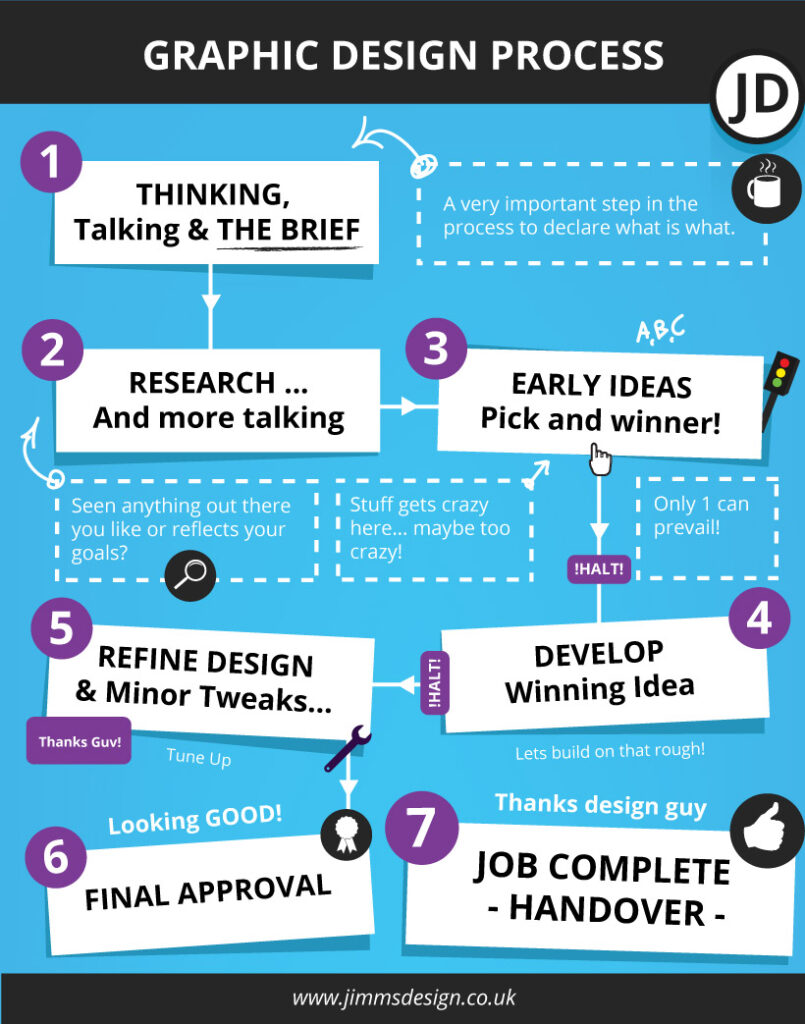
For those who are interested, I have written a dedicated post about my graphic design process.

Some of you may also wonder what a graphic design process even is. Well, it is not just drivel and magic dust; there is a process. Here is a general overview when working with a human!

my board game process

5 ) Solidifying the Core Product Concept – Important note:

This is not the stage for major redesigns — only improvements.

Big changes here may require making significant changes across multiple elements and components and can be costly to do. Sometimes, this is required to make a better and more compelling product, but if at all possible,I try to encourage a client to make these pivotal changes earlier in the prototype development process. Hence, a brief and discussion in the beginning.

But, saying that, making something is a journey and not always a straight road!

divider

6) Developing a Board Game Prototype Process | Playtesting & Final Adjustments

Playtesting a board game prototype process
This is where the game is truly tested. I gather feedback through:

  • Self-testing
  • External playtesting (friends, players, target audience)

I observe:

  • Is the game fun?
  • Are the rules clear?
  • Are there exploits or imbalances?

Feedback is then used to:

  • Fine-tune mechanics.
  • Simplify where needed.
  • Strengthen the overall experience.

This step may need to be repeated multiple times, depending on what is required of the prototype and client budgets!

7) Prototype Completion & Handover


The final stage. The development of a board game prototype process is now in its latter stages, and my part in the project is most likely drawing to a close. ( A solitary tear… )
Transfer and hand over of prototype


Once the prototype is tested and refined:

  • Rules are clearly written ( Find a professional proofreader! ).
  • Components are finalised ( or near-final ).
  • The game is packaged into a presentable prototype and sent to a printer!

This may include:

  • Printed cards and boards.
  • Rulebook/rules / rulesheet.
  • Other components.

At this point, the prototype is ready for:

  • Demonstration.
  • Pitching.
  • Further development or production.

Or, you may take your prototype and ask yourself whether it needs more fine-tuning. Doors and options are open.

Developing a board game prototype process example: print liaison

Optional, and not always part of my service, but I can and have acted as a mediator to arrange the printing and manufacture of a board game prototype for a client.

In short, I deal with the headache at a cost!

This is not always the case for every project. On occasion, the client may prefer to arrange the printing themselves or make amendments to the product. A real-life scenario is if the client wants to amend game rules or text in InDesign.

There are advantages and disadvantages to the client working with print themselves.

My Board Game Prototype Process | Final Take Away

Creating a board game prototype is not a straight path…


It’s an iterative journey of:

  • Testing
  • Refining
  • Eliminating weaker ideas and building an initial core game!

You start broad, then narrow down to the strongest concept.

Like sculpting – you shape, refine, and remove all until the final form emerges! Metaphorically speaking, the same applies to developing a board game or board game prototype.

AND after all that, there is still no guarantee that the developer will make their millions or their money back. Developing a product hard path, without a golden egg or promise at the end.

Golden egg at end of journey!

What is the process of making a board game prototype? Other posts

Whether you came to this post to read more about developing a board game prototype and its processes ( thank you for reading to the bottom ). Or, whether was to read about my board game prototype development process, you may find some of the following of interest.

From the graphic design process, the journey to case studies.

Box mock up
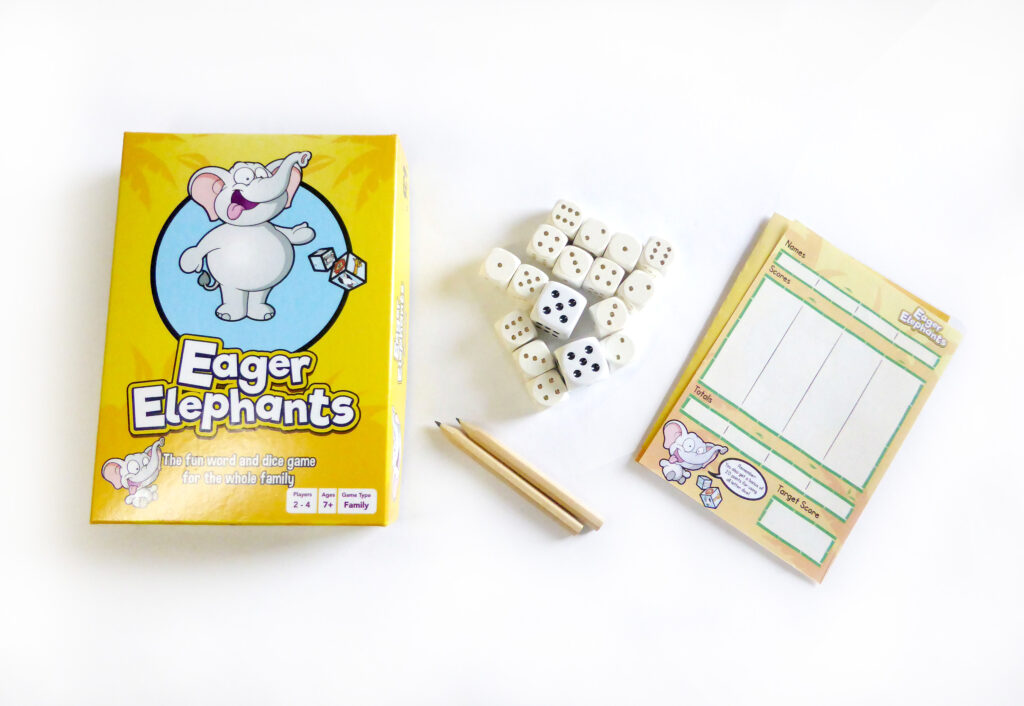
Box mock up & Packaging – Eager Elephants

My Board Game Prototype Process | Services

Thank you for reading. Here is a list of relevant services and skills I can offer in helping you to bring your vision to life. All pages are hosted on my commercial portfolio website.

Need a hand with your board game design project?

Dragon Bone Games:-


In addition to my commercial board game design services hosted on Jimmsdesign – my portfolio website, I also run a hobby game blog celebrating the passion of making board games. In addition, it celebrates other aspects of the board game hobby! I would encourage you to read and bookmark it! Thanks, awesome reader!

Dragon Bone Game Website Links :

My Board Game Prototype Process | Other interesting Sources and information

You may or may not know, but I am also an artist! I have produced artwork for games! Feel free to take a look at my art website.

JD Illustration

All content in this article is copyrighted by me and their respective owners.

Jimmsdesign 2026.

How to write a brief for a Graphic Designer: explained by a designer

How to write a brief for a graphic designer… let me explain.

Briefs, and not the kind of underpants, are an essential part of the design process.

A design brief enables a client to outline what is required and needed from a project. It is a guide and plan so that all parties involved know what needs to be done and carried out. A well-written and detailed brief will not only help with pricing and estimates but also with the project goals and describe what needs to be done to meet these goals.

You could also pretend that a brief is an open-ended recipe for designers to refer to. Some designers may even help you with writing the recipe in the first place. If you ask nicely.

How to write a brief for a Graphic Designer - A detailed post offering tips and ideas to creating a brief for a designer

This post has been written for a couple of reasons:-

1 ) To offer a straightforward example of how to write a brief for a graphic designer. What to include, what not to include, etc, etc.

2 ) This is also a rewrite of the previous post on writing a brief. This is an updated version of how to write a design brief for me … and potentially other designers.

Also, read on to find out about the 7 P’s

Divider animation for How to write a brief for a graphic designer


How to write a brief for a graphic designer – Short Answer

When writing a brief for a graphic designer, make sure to include what you need, what you want, format, and potential budgets as a bare minimum so that a designer can respond and fulfil your project’s needs based on these criteria. The designer, such as myself, will establish how to meet those goals based on a well-planned process.

A basic design brief enables a designer to work to a professional standard and adhere to some kind of plan, or ‘scope’. A brief acts as a set of guidelines that both parties, specifically the designer, will adhere to.

A design brief does not need to be a novel, or strictly speaking, complete. But detail and some thought is key. ( I can help with completing a brief if you are struggling.)

As a tip, it is sometimes best for both the client and the designer to follow a set of clear and concise bullet points for a design project. I am a fan of bullet points as they allow me to mark off some key stages and milestones in a project.

An experienced designer who communicates verbally or in writing will most likely ask questions about you and your project. This is to pick up on those smaller details and to potentially help you answer questions you have not yet considered.

The more detail you include in the beginning, the faster the design process can begin.

Divider


I’m a client, do I need to write a brief for a Graphic Designer?

You do, sorry. Or at least a brief needs to be written by somebody! A brief can be regarded as a boring but crucial step in the design process, whether it be my design process or somebody else’s.

I love a client who has seriously considered a brief, even if they are somewhat unsure of what may be involved. It shows some thought needs to be made, even if they are unsure of what is involved with the journey.

If you are stuck, I am more than happy to help in this stage as a consultant in a ‘pre-design’ phase of your project.

How to write a brief for a graphic designer


This is a list of key points and stages to consider when constructing a design brief for a graphic designer. Great for beginners and… seasoned brief makers!

  1. Purpose of the project
  2. The plan ( if you have one )
  3. Budgeting
  4. Timeframes
  5. Target audience
  6. Any brand or brand guidelines
  7. Format for deployment
  8. Any limitations
divdier

What is the project’s purpose?


What is the purpose of the project? This can be incredibly beneficial to share when considering how to write a brief for a graphic designer.

The what:

  • Is it to expand the business?
  • Launch a new product range?
  • Promote the service that you are already offering?
  • Is it a create a logo to do ‘X’?
  • Design a Kickstarter page to excite potential backers?
  • Create a piece of box art for a board game?
  • Content graphics for a blog?


Establishing a basic ‘want’ or what, rather than just spouting, you need some chaotic creativity in your day. This is important for budgets, sanity, and all else.

divider


PLAN – Even a loose one is important for a graphic design project

You will need to have some sort of a plan and end goal in mind for the project. Otherwise, where will the project start and end, and what are the terms?

Unless it is a day rate or a fixed-term project, working on a series of smaller projects. Even still, it is likely that this too will have an end goal even if not s solid plan.

If you don’t know what it is that your business needs from a designer, that’s OK! Some designers could help. I have worked as a design manager, for bigger projects, I would never work without a plan.

Even a small one.

Without a plan or an end goal, even a loose one, you will end up going around in more circles than is necessary. Leading to frustration, costing time, money, and making a surprisingly challenging job – even more challenging.

animated divider

How to ask yourself questions when creating a brief for a graphic designer

People don’t always understand designers, designers don’t always understand people for that matter!

I remember asking a former colleague questions for a project, only for that person to start accusing me of ‘asking too many questions’ in tone that suggested I was picking on them. Or to be more specific, they are accusing me of only asking them all these questions. Yes, a lose-lose scenario sadly. Strange how this stuff stays!

Designers should ask questions – that is that. Unless they are managerial or business owners or something similar, they will need to know what you are trying to achieve. Intelligent design requires questions most of the time.

There is a way of marrying project requirements with ‘how to write a brief’ for a graphic designer. Here is a pair of graphic design shoes for you to wear.

The Designer’s Shoes (Designer’s Brain )

  • What is the aim of this project?
  • Is this part of a bigger picture?
  • Has a budget been written, and can what needs to be done be done within budget?
  • What are the client’s expectations? ( Whether realistic or not )
  • How can I do what needs to be done?
  • Will they give me resources, logos, photos, fonts etc?
  • Can I make this look awesome?
  • What is the overarching tone and vibe?
  • Has this person worked with other designers before?
  • Is the person great to work with?

To name a few.

These are some of the examples I will ask myself, on how I can help a client achieve what it is they want to achieve.

To translate to the client, you may wish to consider the following when creating a brief for a graphic designer

Types of things to consider as the client – (Client’s Shoes )

  • What is the purpose of this project?
  • Does this tie in with a bigger project?
  • What do I need?
  • What do I want? ( or better still, what does my ‘customer’ want or need )
  • Have I considered the competition?
  • Have I checked any legal pitfalls or copyright issues?
  • Will the designer ask for things like logos, photos?
  • Have I done my homework?
  • When will…
  • Will my budget and expectations align with the designer’s expectations?
  • Have I picked the right designer for me?
divider

Writing a brief for a graphic designer | The Dreaded Budget

Dum dum dum! The budget… the deal maker and deal breaker!

The budget is important.

The design budget will affect the amount of time, resources, and other expenses that will be allocated to your project. When considering a budget, you may hear words and phrases such as ‘fees, deposit, rates, when will payments occur’, and so on.

One of the most common questions I get asked, sometimes before I have been supplied with a brief, is…

How much?”

Before settling and agreeing on a project with a designer, you need to talk with your designer about how much you can afford to spend and what they are willing to do. And, what is it they need to help with! The more information you can offer, the easier it may be for a designer to estimate their quotations.

Below are 2 methods of payment types and methods to further illustrate how a designer may expect to be paid.

Rolling day rates – what are they?

Charging by the day is just that. A designer bills for their time on a day-by-day basis. A client and designer may prefer this method for larger, more experimental projects. In certain circumstances, this may be more mutually beneficial for both parties.

The pay by the day is far more open-ended financially and allows more room for creative freedom and development. A drawback with this free-flowing approach is that money can keep on going into a project; regular checks on the amount of money spent on a project is wise.

It is also a good idea to see if you can get a ballpark figure in the beginning, especially with smaller businesses with tighter purse strings.

How to write a brief for a graphic designer handy tips!!


*As a tip, whatever the ball park is or was, it can be wise to allow room for plenty of financial padding, but that is a topic for another time. Especially when considering how much it costs to design a board game. Money can keep going in more and more.

Design project fixed price – what is it?

A ‘fixed price’ means pretty much what it says, the budget is ‘fixed’ – it has a spending limit! This method means there is a roof or cap on the amount of money that can be spent on a design project. A certain amount of funds may be allocated to a campaign or project which is controlled either by the company’s directors, owners, or accounts department, or by a 3rd party.

Companies that are given grants may prefer to work this way and pay in larger lump sums as opposed to smaller, more time-consuming milestones.

Fixed price budgets can be great if it suits both parties. But there are realities that come with this that may be alarming.

Questions mark graphic - why can budgets change?
Why can this happen?

It is not uncommon for contracts and prices to need to be re-evaluated mid-way through a project, however disruptive this can be.

There can be a variety of reasons for these changes, such as new ideas coming into play, not enough information being given at the start, a change of information, more decision makers getting involved, a change in project scope, and generally, more time and work needed to complete a project. Typically, it comes down to more being heaped onto the designers to play to do what needs to be done!

There are many variables.

Substantial changes to a project specification can significantly alter fees and budgets. There is most likely a term for clients who intentionally omit key information, but this evades me for this post.

I work with the term fixed ‘estimate’. And there is a valid reason why I now address it as so.

Consider the timeframe when writing a brief for a designer!

The when!

I need ‘x’ by…
How long will it take?…
Can I have it by?…
How long will this take!…

And other phrases to that effect.

Take into account when you need a project to be completed. Even seemingly smaller projects can take time to finish. This can be due to the designer working on several projects at once, and other life and work commitments coming into play. And… the process is just taking the time that it takes!

When writing the brief, consider dates and deadlines – if applicable.

  • Don’t leave everything to the last minute
  • Don’t supply key information such as text, photos, and assets at the 11th hour for the designer. ( Do it at the start! )
  • Don’t vanish without a trace ( designers need communication )
  • Don’t set unfair time goals and expect not to be disappointed

Make sure to get everything ready from the start, or at least as much as possible! If you are unsure of what you need, how long it will take!

Consult a designer.

Let the graphic designer know your target market

When writing a brief for a graphic designer, you should consider your target audience. It can also be prudent to place some of your target audience’s wants and tastes above your own.

Stipulating who your target audience is… is an important stage when considering your design brief and how to write it.

Here are some criteria based on your target audience:-

  • Children
  • Teens
  • Adults
  • Professionals
  • Tourists
  • Trade
  • Age
  • Sex
  • Religion

And so on.

When submitting your brief to a designer, consider who the end product is for.

Are there any existing logos or brand guidelines?

Do you already have existing brand guidelines for your company?

If you have any existing logos, style guides, fonts, dos and don’ts for your logo and branding, remember to include this in a brief or submit this as a separate document to your designer. This is especially important if you are forming a new client and graphic designer relationship.

Any relevant brand guidelines can be incredibly beneficial to the designer.

Example logos
You may find this article interesting about logos!

How do you want your design project formatted for deployment?

How do you intend to ‘deploy’ the project?

Will this be a small web banner? A flyer? Will you be using a printer? Will this be for the screen? Or will it be for print?

Having some idea of where, when, and how you intend to use your design can be important for a designer.

You may need your artwork supplied as a PDF, a JPG, or… as an AI file, or something else entirely! When considering how to write a brief for a graphic designer, consider how the artwork could be used in the future so that the designer can offer the best solution going forward.

Include any potential limitations in the brief


When establishing your brief for a graphic designer, is there anything that a designer aught to know about you, your business, or the intent of your project?

  • Is there anything that the designer can’t do? Or should I do?
  • Will it be for a certain target demographic?
  • Politically sensitive?
  • Colours that should be avoided?
  • Themes best avoided?

Writing a brief for a Graphic Designer | Basic Free Checklist Summary

A checklist and summary of what you may wish to include with your brief, plus any other useful details. See this as a raw recipe and ingredients of what the designer needs to include!

I can smell the tasty design dish now!

In short, consider the following when writing your brief for a designer:

  • 1 Purpose of the project
  • 2 The plan ( if you have one )
  • 3 Budgeting
  • 4 Timeframes
  • 5 Target audience
  • 6 Any brand or brand guidelines
  • 7 Format for deployment
  • 8 Any limitations

Considered adding the list above to open the discussion with a designer – such as myself, to see what needs to be done from there.

All in all, if you have made it this far, don’t overthink it too much. Write something down and see if a designer can help you somewhere.

You may find this post interesting –

How to write a brief for a graphic designer - the design process

My design process in steps.

Other subjects around graphic design and processes

There is a saying that I have heard from varying jobs – it is an army saying that I think is great. I would like you to remember it…

7 P’s – ( Even applicable when writing a brief for a graphic designer )

Piss Poor Planning Promotes Piss Poor Performance.

And it is too true. If you can’t remember anything of what I have said about how to write a brief for a graphic designer, try to remember the saying at least.

Source : 7 P’s

Information and content copyright www.jimmsdesign.co.uk – 2025 and property of this blog.